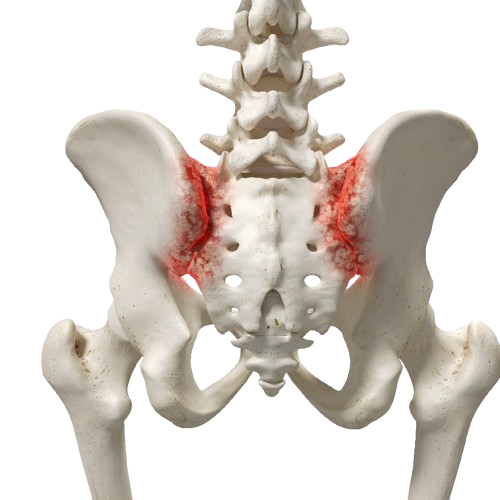
If you have struggled with nagging SI joint pain, clicking hips, or a lower back that aches every time you stand still in a queue, there is a high probability you have tried almost everything.
Do you recognize this:
You have stretched your hip flexors and piriformis. You have foam-rolled until you felt bruised. You have tried Pilates, yoga, strength training with progressive overload, and deep tissue massages. Maybe you have even gone to the doctor, had an MRI, and been told that everything looks “completely normal.” Which only leaves you feeling frustrated, slightly dismissed, and wondering why your body still feels so painful, tense, and fragile all at the same time.
What I want to tell you in this post is something most people never connect.
You don’t feel chronically tight despite being hypermobile. You likely feel tight because you are hypermobile.
Of course I can’t tell if you’re hypermobile without examining you but if you identify with the list of symptoms I mentioned at the top of this page, then you may very likely be. And until you address the real reason your body is gripping, stretching will never give you lasting relief.
The Pattern I Kept Seeing – In Clinic and in Myself
There are two reasons I am pouring my heart into building my upcoming online course, ROOTED.
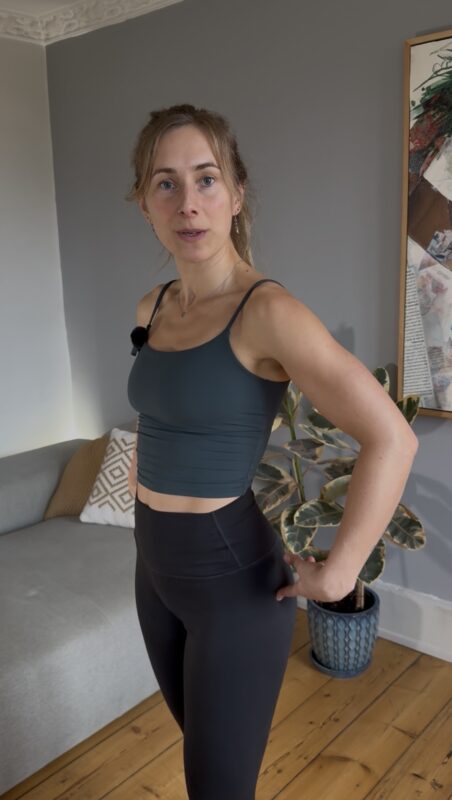
The first is what I kept seeing on my osteopathy treatment table in Copenhagen, week after week. Again and again, the same type of woman would walk through my door. On paper, she had a completely unrelated list of complaints. Yet when I zoomed out, it was the exact same whole-body pattern every single time:
- The physical clues: A woman in her 30s or 40s with stubborn SI joint pain, tailbone discomfort, or clicking and popping hips. She carries chronic tension in her neck, shoulders, and jaw, and often grinds her teeth at night. Her lower back pain flares up when sitting or standing still, even though walking and moving around actually feels fine. She is constantly fidgeting in chairs, struggling to ever find a truly comfortable position.
- The physiological clues: Underneath the musculoskeletal pain, there is almost always a history of stubborn bloating, occasional constipation, painful periods, or pelvic floor tension (like urinary frequency, leaking, or feeling like she can never fully “drop” and relax her pelvic floor).
- The mental and nervous system clues: She is almost always an overdoer. A high-achieving, Type-A woman, often an eldest daughter, a caretaker, a recovering people-pleaser, or a perfectionist with a busy career or social life who runs on nervous system overdrive. Possibly without even noticing it because it is her default pace.
The second reason I needed ROOTED to exist is deeply personal. I am that woman.
A few years ago, during a period of burnout, persistent SI joint pain and hip injury took over my life. It took me more than a year to truly get rid of it. Looking back, that burnout brought all the missing clues to the surface. Clues that pointed directly to my own hypermobility: a clicking hip, relentless tension in my deep butt muscles (especially the piriformis and obturator internus muscles), tension headaches, chronic neck and shoulder tightness, and a clenched jaw at night.
When I finally connected the dots through my osteopathic training and my own recovery, it felt like someone had turned the lights on in a dark room. All of these seemingly random symptoms were connected. And more importantly, all of them could be alleviated with the right knowledge and tools.
Why You Feel Tight Because You’re Hypermobile
When most people hear the word hypermobility, they picture a contortionist or someone who can effortlessly drop into the splits.

In reality, many hypermobile women don’t feel flexible at all. They feel stiff, locked up, and constantly in need of a good stretch.
Here is the simple biomechanics behind why that happens.
Hypermobility means your joints have a greater-than-average range of motion because your connective tissue and ligaments have more elasticity. When your ligaments offer less passive stability, your brain and nervous system step in to protect you. They look around for backup and say, “We don’t feel safe or stable here. Brace!”
So your superficial muscles (your piriformis, hip flexors, upper traps, jaw, and pelvic floor) clench down and grip to artificially create the stability your joints are missing.
The less deep, functional stability you have around your pelvis and spine, the harder those superficial muscles have to grip to compensate. That is the “clench loop.”
This is also why stretching, foam rolling, and aggressive massage only give you temporary relief, or even make you flare up worse the next day. When you force a tight, protective muscle to lengthen without first giving your nervous system a safer way to stabilize the joint, your brain panics and grips right back down. Often even tighter than before.
Hypermobility in itself does not equal pain and instability. When you teach your body how to control the range of motion you actually have, chronic pain and tension are not a given.
Why I’m Building ROOTED (And How It Works)
When I was healing my own SI joint pain, and helping hundreds of women with the exact same struggles in my clinic, I realized how frustrating it is to only ever be given part of the story. One practitioner tells you to strengthen your glutes. Another tells you to relax your pelvic floor. Another tells you to manage your stress. Nobody shows you how your jaw, your diaphragm, your gut, your feet, and your pelvis are all talking to each other.
I wanted to create a step-by-step course that shares all the links, so you don’t have to spend years piecing it together on your own. You shouldn’t have to rely on endless appointments or exhausting 60-minute workouts just to feel normal in your body.
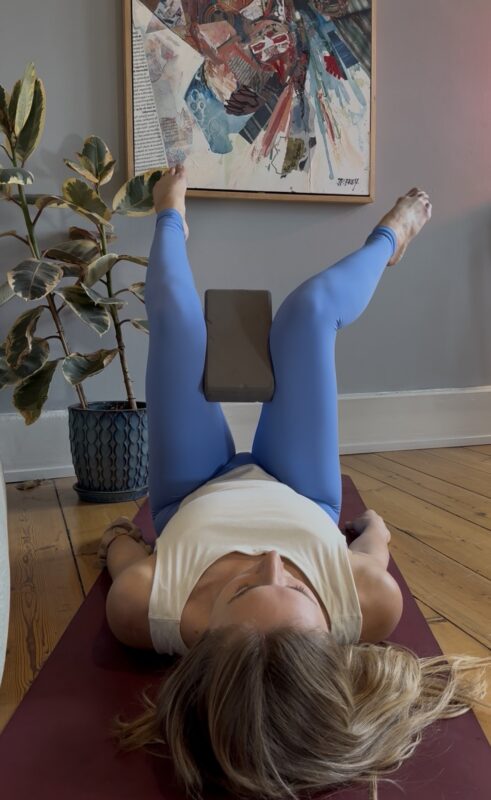
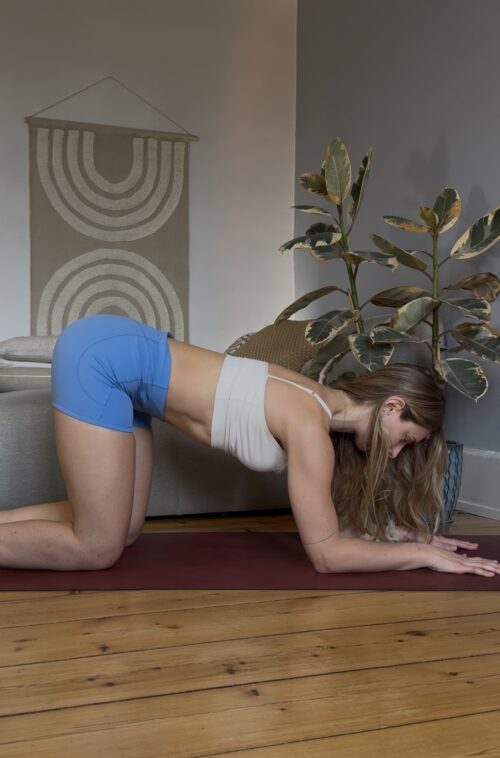
You don’t need 1 to 2 hours of intense training every day to fix this. In fact, pushing through grueling workouts or core-crushing circuits usually feeds straight back into the clench loop. For most women, lasting change comes from just 10 calm minutes a day of engaging the right deep stabilizers and signaling to your nervous system that it can finally stop bracing.
What We Do Inside ROOTED (In 10 Minutes a Day Over 4 Weeks)
ROOTED is designed to take women with stubborn SI joint, hip, and low back pain from chronically clenching and feeling fragile to moving with effortless, ground-up stability and trust in their bodies.
Here is how we break the clench loop step by step:
- Decode Your Pattern & Self-Assess: You’ll learn why a clean MRI doesn’t mean your pain isn’t real, how stress drives protective pelvic gripping, and how to run a simple 5-minute baseline audit (looking at your breath, pelvic alignment, abdominal control, and single-leg stability) so you can track real progress by Day 28.
- Release Hidden Fascial & Neural Anchors: Using gentle osteopathic self-release techniques targeting the iliacus and visceral-fascial tension, the diaphragm, and even the mandibular nerve and jaw, you’ll learn how to soften deep guarding and calm acute SI joint flare-ups in minutes.
- Breathe for Internal Stability: Instead of sucking in your stomach or aggressively bracing your core, you’ll learn how to use 360-degree rib expansion and the “Abdominal Anchor” to naturally decompress your lower back and pelvic floor.
- Build Ground-Up Support: Finally, we wake up the deep stability team (your foot tripod, adductors, hamstrings, and glutes) so standing still, walking, climbing stairs, and lifting in daily life feel effortless and supported from the ground up.
(A quick note on what ROOTED is not: it is not an overnight magic pill, a grueling fitness challenge, or a replacement for individualized medical care if you have red-flag symptoms. Calming relief often starts in session one, while true neuromuscular rewiring builds steadily over 4 to 12 weeks, especially for hypermobile bodies.)
Join the ROOTED Waitlist
If you read that list of symptoms earlier and felt like I was reading straight from your diary, I want you to know that your body isn’t broken, and you are not imagining things. You just haven’t been shown how all the pieces fit together yet.
I am planning out ROOTED right now, and it will be available at the end of April 2027 and I cannot wait to share it with you!
If you want first access when doors open, along with early-bird bonuses and behind-the-scenes updates as I finish building the modules, join the ROOTED waitlist here.
It’s time to stop stretching a body that is begging for stability, and start feeling genuinely at home in yourself again.