When I tell people what I do, it is usually the osteopathy part that requires an explanation. Most people know what physiotherapy is. Osteopathy is still something of a mystery to many. So here is my best explanation.
What is osteopathy?
Osteopathy is a manual form of treatment built on an understanding of the body as an interconnected system. It is based on the idea that symptoms are rarely caused only by the area where they are felt. They are often connected to tension patterns and functional imbalances somewhere else entirely in the body.
That is precisely what made me so excited about osteopathy the first time I experienced it. I had been living with migraines and neck and jaw tension for years. An osteopath found, within a few minutes, a tightness in the connective tissue at the front of my chest. He explained that this tightness was pulling me forward and creating increased tension in the neck muscles. Ten minutes of treatment. No migraines since.
That is osteopathy in practice. You do not just treat where it hurts. You find out why it hurts.
It is not always quite that straightforward to resolve symptoms – I was lucky in that case! But it really showed me the potential of osteopathy as a treatment approach.
Osteopathy originated in the late 19th century in the United States, founded by the physician Andrew Taylor Still. His idea was that the body has an innate ability to regulate and heal itself, if mobility and flow in tissue and systems are supported. That is still the core of the discipline today. And it is the philosophy I bring with me into every treatment room.
The body as an interconnected system
One of the things I find most fascinating about osteopathy is that you can never look at just one thing. The body is not a collection of separate parts that can be fixed one at a time. It is a system where everything is connected.

Connective tissue is a good example. It surrounds all structures in the body – muscles, organs, bones, nerves. Everything is wrapped and connected by the same tissue. When connective tissue tightens in one place, it can pull on structures far away. A tight hip flexor can pull on the diaphragm. A tense diaphragm can cause neck pain. A restricted liver can affect mobility in the lower back.
That may sound abstract. But when you experience it in your own body, it suddenly makes a great deal of sense. Many of my clients say that after a treatment they understand their body in a completely new way. Not because I have explained a lot of theory, but because they have felt the connection themselves.
What does an osteopath work with?
An osteopath works with the whole body. This includes joints, muscles and tendons, connective tissue and fascia, organs and their attachments, the nervous system, and the skull and spinal canal.
It is this broad palette that sets osteopathy apart from many other manual treatment approaches. We do not stop at muscles and joints. We look at the whole picture.
In my treatments I use techniques such as joint mobilisations and manipulations, myofascial release, visceral treatment, craniosacral therapy, muscle inhibition and neural mobilisation. Which techniques I use always depends on what the body shows me that day. There is no fixed protocol. The treatment is adapted to you and your body.
How does osteopathy differ from other manual treatment approaches?
Osteopathy vs physiotherapy
As a qualified physiotherapist who is now close to completing my osteopathy training, I have a pretty good sense of the difference from the inside.
Physiotherapy is often more focused on local function, strength and rehabilitation of a specific area. It is really well suited to many things – acute injuries, post-operative rehabilitation, working with strength and mobility in a specific area.
Osteopathy works more broadly with the connections between structures and systems throughout the whole body. This makes particular sense when the issue is more complex or has developed without a clear acute cause. The osteopath examines thoroughly to find the root of the problem – and that root may lie in a completely different area to where you feel the symptoms.
It should be said that there are physiotherapists who work in a very holistic and integrated way. It is just as much about the individual practitioner as about the profession. My own experience with physiotherapy was not enough to resolve my migraines. But that changed when I found osteopathy.
Osteopathy vs chiropractic
Chiropractic is typically more focused on joints, especially the spine, and often uses more direct adjustments. Osteopathy works more broadly with joints, muscles, connective tissue, organs and the nervous system. An osteopath will rarely stop at the spine if the examination points to the problem having its roots elsewhere.
Both professions can be really effective. They just do not always solve the same problems.
Osteopathy vs body therapy
Body therapy is often more experience- and emotion-oriented, with a focus on emotional release and bodily awareness. Osteopathy is clinically grounded and structurally oriented. That does not mean osteopathy does not affect the nervous system or your general wellbeing – it does, significantly. But it happens as a consequence of the structural work, not as the primary goal.
When does osteopathy make sense?
Osteopathy is relevant for pain and tension, reduced mobility, functional imbalances and symptoms without a clear explanation. But it is also relevant as prevention and as a way of understanding your body better.
I see many clients who have tried a lot of other things before coming to me. It is not because the other practitioners have done anything wrong. It is because the body is a complex system, and sometimes it takes a different perspective to find what is keeping the problem going.
Some of the things I most commonly help with are neck pain and tension headaches, back pain, jaw tension and TMJ issues, migraines, constipation and irritable bowel syndrome, stress symptoms and an overloaded nervous system, and pain without a clear structural cause.
What they all have in common is that they are rarely resolved by only treating where they are felt.
Read more: When does it make sense to see an osteopath?
Is osteopathy right for you?
If you have an issue that has not resolved despite other treatments. If you have symptoms that seem inexplicable. If you simply want a thorough look at what is going on in your body. Then osteopathy is likely relevant for you.
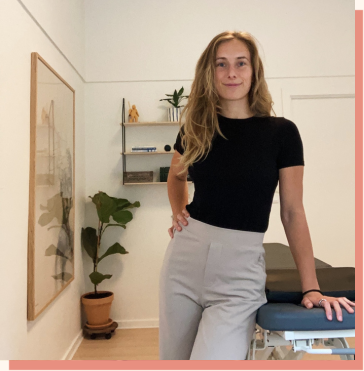
And if you are unsure, you are always welcome to write to me before booking. I am happy to help clarify whether it makes sense for you.
Osteopathy in Copenhagen
You are welcome to book an appointment for osteopathic treatment with me at Livets Klinik in Nørrebro.
See you on the table!